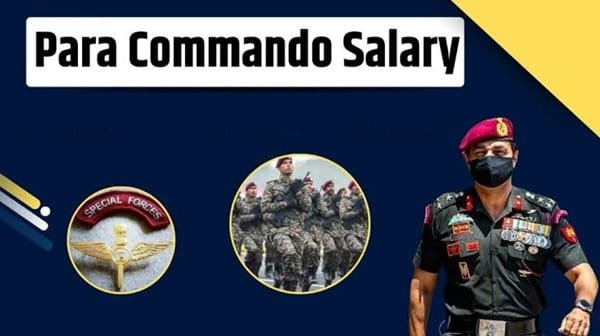
Para Commando salary in 2026 isn’t set on a separate pay scale. A soldier or officer in the Parachute Regiment’s Special Forces (Para SF) draws the normal Army pay for their rank, which is basic pay plus Military Service Pay plus 60% DA on both. On top of that comes a Special Forces Allowance, one of the largest risk allowances paid in the armed forces.
That allowance is what separates a Para SF Sepoy’s pay from a regular Sepoy’s. Published figures for it vary, so this guide shows what’s confirmed, what’s reported, and how the numbers work out at each rank.
| Para SF Pay 2026 | Details |
| Base pay | Same Army rank pay (Sepoy ₹21,700 to officer levels) |
| Military Service Pay | ₹5,200 (JCO/OR), ₹15,500 (officers) |
| DA | 60% of basic + MSP |
| Special Forces Allowance | Reported ₹25,000 for officers; JCO/OR figures vary (~₹17,300 to ₹25,000) |
| Parachute allowance | Small fixed amount for para-qualified personnel |
| Siachen Allowance (if posted) | ₹42,500 (officers), ₹30,000 (JCO/OR) |
| Para SF Sepoy gross (approx.) | ~₹63,000–71,000 |
How Para SF Pay Is Built
A Para Commando’s payslip has four layers:
- Rank pay: the same basic pay as anyone else of that rank in the Army
- Military Service Pay: ₹5,200 for soldiers and JCOs, ₹15,500 for officers
- DA: 60% of basic plus MSP
- Special Forces and para allowances: paid only while serving in Special Forces
Being selected for Special Forces doesn’t change your pay level. Promotions still follow Army rules. The difference in pay comes almost entirely from the allowance.
The Special Forces Allowance
Under the 7th Pay Commission, most risk-based allowances in the armed forces are set through a Risk and Hardship matrix. Each cell in the matrix has one rate for officers and a lower rate for JCOs and other ranks.
Here’s what published sources say:
- Several salary guides give ₹25,000 a month as the Special Forces Allowance for officers.
- For JCOs and other ranks, figures vary. The top cell of the Risk and Hardship matrix is commonly cited at ₹17,300. Some guides quote ₹25,000 for all ranks, and older sources give much lower pre-7th CPC figures.
No official Defence Ministry rate for JCOs and ORs came up in our research, so treat these figures with caution. The actual allowance on your pay slip, and any later revisions, will be in your unit’s pay records.
Parachute Allowance is a separate, much smaller monthly payment for para-qualified personnel. It’s quoted at roughly ₹1,200–1,400 a month.
Sample Gross Pay by Rank
These figures exclude the parachute allowance and any field or high-altitude allowances. Both Special Forces Allowance figures are shown for JCOs and ORs, since sources disagree.
| Component (₹) | Sepoy (L3) | Havildar (L5) | Captain (L10B) |
| Basic pay | 21,700 | 29,200 | 61,300 |
| MSP | 5,200 | 5,200 | 15,500 |
| DA @ 60% (basic + MSP) | 16,140 | 20,640 | 46,080 |
| Transport Allowance + DA | 2,880 | 2,880 | 11,520 |
| Special Forces Allowance | 17,300 (or 25,000) | 17,300 (or 25,000) | 25,000 |
| Gross (approx.) | ~63,220 (or ~70,920) | ~75,220 (or ~82,920) | ~1,59,400 |
A regular Sepoy in a peace station earns about ₹45,900 gross. So selection into Para SF can raise a Sepoy’s monthly pay by about ₹17,000–25,000, depending on which Special Forces Allowance figure applies.
Deductions include Armed Forces Personnel Provident Fund contributions and group insurance premiums. At Sepoy and Havildar level, income tax is usually zero or very low. Officers pay tax on their taxable income. Some risk allowances paid in notified areas get tax concessions.
Operational Allowances Also Apply
Para SF units are deployed in the toughest environments. Personnel can receive area-based allowances as well, depending on where they’re posted and the rules on combining allowances:
- Counter-insurgency and field area allowances in operational areas
- High Altitude Allowance in mountain postings
- Siachen Allowance. Following a government decision on 7th Pay Commission allowances, this is ₹30,000 a month for JCOs and jawans and ₹42,500 for officers. Soldiers deployed there receive it regardless of unit.
Rules on which allowances can be drawn together are complex. Your unit’s pay records are the only reliable guide.
Para vs Para SF
The Parachute Regiment includes both regular airborne battalions and Special Forces battalions. Soldiers in regular para battalions are para-qualified and get the parachute allowance. Special Forces personnel have also passed the SF selection and probation process, which is known for its high dropout rate. Only they receive the Special Forces Allowance.
Being “Para” isn’t the same as being “Para SF.” The pay gap between them comes mainly from the Special Forces Allowance.
MARCOS and Garud
The Navy’s MARCOS and the Air Force’s Garud commandos are paid on the same defence pay matrix and receive the same Military Service Pay. Salary guides say they get special forces allowances structured similarly to the Army’s Para SF, with small differences in service-specific allowances like sea-going pay or flying-related allowances.
Pension
As regular Army personnel, Para SF soldiers and officers are covered by the defence pension scheme, not the NPS. Special Forces service counts towards pensionable service in the usual way, which is a major long-term benefit.
FAQs
Q. What is a Para Commando’s salary per month in 2026?
A Para SF Sepoy’s gross pay is roughly ₹63,000–71,000 a month, depending on which Special Forces Allowance figure applies. A Para SF Captain earns about ₹1.59 lakh gross before other posting allowances.
Q. How much is the Special Forces Allowance in the Army?
It’s reported at ₹25,000 a month for officers. For JCOs and other ranks, published figures range from about ₹17,300 to ₹25,000. Check your unit’s pay records for the exact amount.
Q. Do Para Commandos earn more than regular soldiers?
Yes. Basic pay and MSP are the same for the rank, but the Special Forces Allowance adds about ₹17,000–25,000 a month on top of regular Army pay.